Roofstock is an online investment platform that enables investors to purchase shares in rental properties and earn returns from rental income and property appreciation. It’s designed to help investors get started in real estate without the hassle of large down payments and property management that traditional investing typically requires.
However, despite those benefits, Roofstock investors often look for alternative investment platforms due to three main problems:
- Modest returns: According to many reviewers, Roofstock properties yield around 3% to 8% on average. It’s lower than what’s typical with more traditional investments like REITs (real estate investment trusts) and index funds, which average around 10%.
- Little skin in the game: While Roofstock owns a 10% stake in the properties on its platform, it typically exits after 12 months, at which point investors bear the risk of the entire asset. Roofstock has very little skin in the game since its money isn’t invested alongside yours for any meaningful period of time, making it difficult to have confidence in its investment options.
- Increased risk: A major risk with Roofstock is that you invest in rental properties directly rather than the debt used to purchase them. As we explain in more detail below, this exposes you to market downturns because debtors are paid first and in full from sale proceeds. Meanwhile, you, as a real estate investor, only get paid after all debtors are paid.
With this in mind, a quality Roofstock alternative should (1) yield higher annualized returns, (2) invest alongside you, and (3) invest in real estate debt and not the rental properties themselves.
Below, we take a closer look at 7 competitors to Roofstock, comparing them against the three factors above.
We start with the Constitution Lending real estate debt investing platform and explain how you can earn returns of 10% to 14% by investing in real estate loans we originate.
Sign up for a free investment account to learn more about our real estate investment options. Due to the quality of our loans, our investors have never incurred a loss of principal.
1. Constitution Lending
Invest in Short-term Real Estate Loans and Earn 10% to 14% Annually
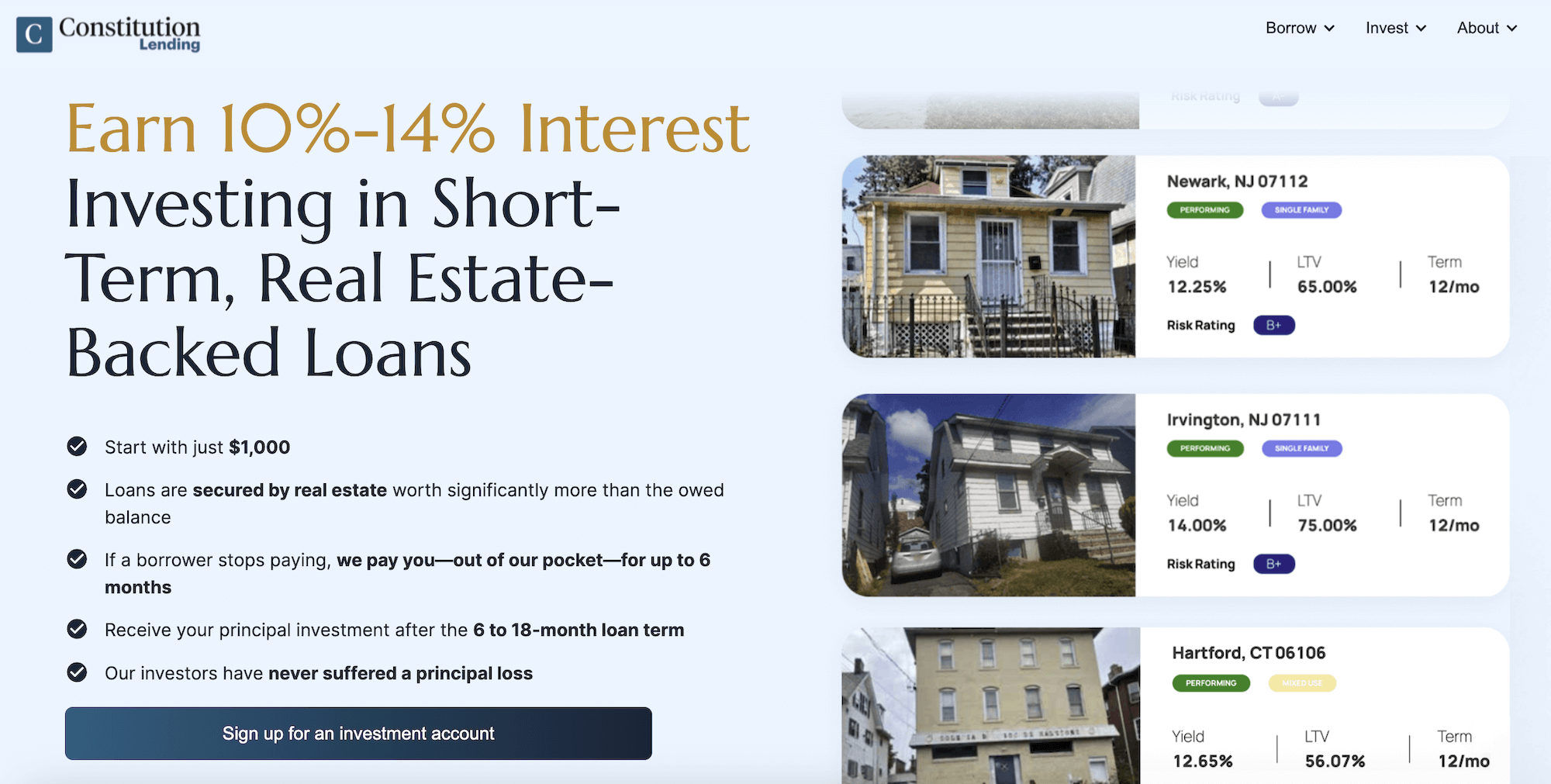
Constitution Lending is a private money lender that has lent hundreds of millions of dollars to real estate investors in the U.S. These loans are 6 to 12 months long and typically used by flippers and construction companies to rehab and construct single-family and multi-family properties.
Through our investment platform, you can purchase shares in our fix-and-flip and construction loans and earn interest payments from borrowers ranging from 10% to 14%. You’ll also get your entire principal back at the end of the loan term.
Here’s what investors say about our real estate debt offerings:
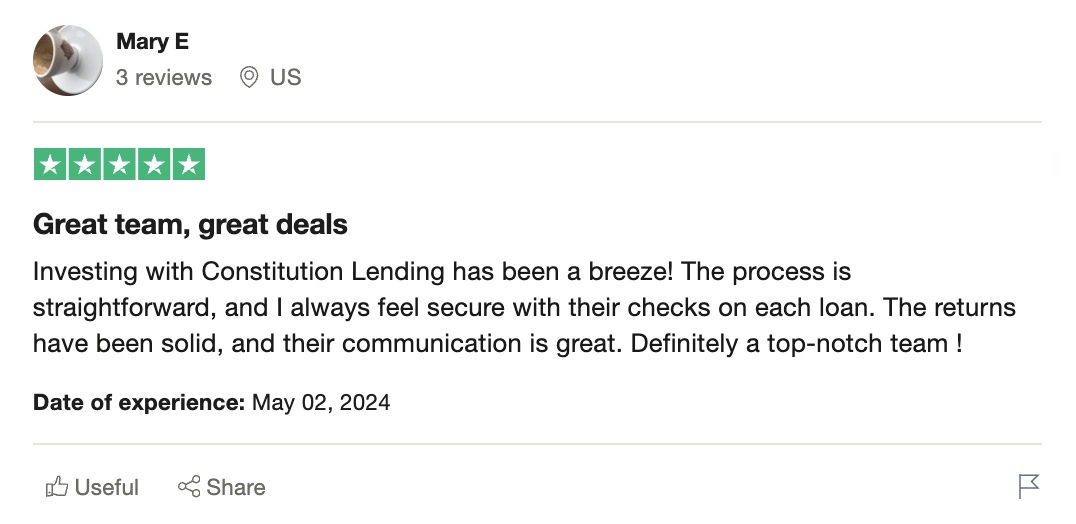

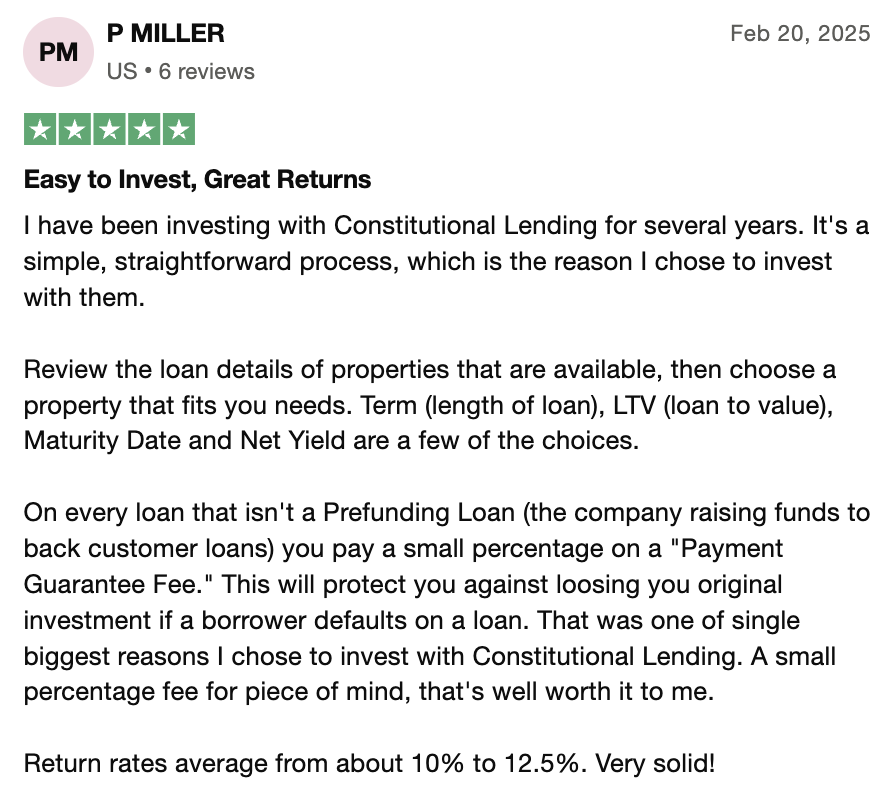
Let’s dig deeper into how Constitution Lending tackles the three issues mentioned above.
10% to 14% Annualized Return on Investment
Interest rates on our short-term fix-and-flip and construction loans range from 10% to 14%, depending on the borrower’s profile. Borrowers make these interest payments on the first of every month until the end of the loan term, allowing you to earn higher yields than Roofstock, REITs, and index funds.
We can command such a high interest rate because we close loans so quickly. We consistently close in 7 to 14 days, while most financing options (like big banks) take 30 to 60 days. Many borrowers prefer to close quickly and pay a higher rate than to wait months and risk losing the property.
In addition, every loan includes a payment guarantee, which means that if a borrower defaults or misses a payment, we pay you out of our pocket for up to 6 months. But as we’ll discuss later, this payment guarantee is rarely needed because our borrowers rarely default.
Read more: How to Invest in Hard Money Loans: A Comprehensive Guide
We Invest Alongside You
As we mentioned above, Roofstock owns only a 10% share in the properties on its platform. After the first 12 months, it usually exits its position, and investors own the entire property.
This gives investors little confidence in the quality of Roofstock's investments; it isn’t invested in the same assets you are for the entire investment term. If a real estate investment does poorly, Roofstock doesn’t share in the losses with investors.
With Constitution Lending, however, we fund all loans on our platform using our own capital and hold a 50%+ share in them for the entire term. Our money is in the same loans you invest in, and our financial goals align to ensure loans perform and generate high yields. This gives investors confidence in the quality of our loan options. We aren’t just doing asset management.
Investing in Real Estate Debt is Safer Than Property Ownership
When you invest with Roofstock, you’re investing directly in single-family rental properties. This is a problem because whenever a property is sold, you, as the real estate investor, get paid last; debtors get paid first and in full. So, if market prices fall, your investment is the first to take the hit.
For example, say you invest in a real estate asset on Roofstock with a valuation of $1 million. $250,000 comes from investors like you, while the remaining $750,000 is financed by a lender. If property prices fall and it can now only sell for $750,000, the lender will recover their entire $750,000 investment, and you take the loss.
However, when you invest with Constitution Lending, you’re investing in real estate debt. You are paid first and in full from any property sale, meaning the borrower’s equity is the first to absorb losses in the property’s value. The borrower must lose their entire investment before your investment is affected.
For additional protection, we cap our loans at 75% of the property’s value, giving you a 25% equity cushion in case the property’s value falls. A $1 million property can drop to $750,000, and you can still recover your entire investment.
Additional Advantages of Constitution Lending Real Estate Loans
6 to 12 Month Investment Horizon
Another advantage of our real estate loans is that they are only 6 to 12 months long. After this, the borrower sells the investment property, and the sale proceeds go to paying debtors.
This means that you receive your full principal investment in just 6 to 12 months; you aren’t locked in for years. Depending on your investment goals, you can choose to withdraw your principal and returns, reinvest in more loans, or diversify into other assets in your investment portfolio.
Payment Guarantees on All Loan Offerings
One of the biggest concerns we hear from investors is what happens if the borrower doesn’t pay. Will I still get paid every month?
That’s why we offer a payment guarantee, which pays you for up to 6 months if the borrower doesn’t pay. During these 6 months, we use our debt resolution expertise to foreclose on and liquidate the property, then use the proceeds to pay your principal and accrued interest.
Most investment platforms, including Roofstock, don’t offer this payment protection. If the borrower or tenant doesn’t pay, you don’t get paid and will simply have to wait until they resume payment.
Low Borrower Default Rate
Our payment guarantee is very rarely needed because of the quality of our borrowers. To illustrate this, our default rate, which is the percentage of our borrowers who stop paying, is under 2%, and the national average is 4%.
Our low borrower default rate is due to our strict underwriting standards. We only lend to top real estate borrowers with the best deals (i.e., low LTV, high credit, extensive experience, strong track record of repayment). Over the years, we have built a comprehensive network of these borrowers.
How to Start Investing in Constitution Lending Real Estate Loans
You can start investing in our real estate loans in under five minutes:
- Sign up for an investment account by providing your full name and email address.
- Once signed up, you’ll be able to see all the available loan options as well as metrics such as its LTV, potential returns, and term.

- You can click on a loan to learn more about its numbers and do your due diligence. You can see the interest rate, as-is value, after-repair value, loan amount, borrower credit score and track record, deal summary, property type, and risk rating.

- Once you’ve made an investment decision and would like to invest in a loan, just click the “Fund this Loan” icon in the bottom right-hand corner of your screen, connect a bank or retirement account, and enter the amount you’d like to invest. You can start with as little as $1,000.
Invest in Constitution Lending Real Estate Debt and Earn 10% to 14% Interest Returns
You can start investing in the real estate loans we originate by signing up for a free investment account here.
2. Yieldstreet

Yieldstreet is an alternative investment platform that allocates investor capital into private-market opportunities, including real estate, private credit, venture capital, digital assets, and other alternative asset classes. Most investments start at a minimum of about $10,000.
The platform aims to give accredited investors access to higher-yielding opportunities and broader diversification than traditional public markets typically offer. Yieldstreet provides both managed funds and individual deals, each with its own risk level, liquidity terms, and minimum investment requirements.
That said, many alternative assets on the platform are illiquid and usually require longer holding periods than Constitution Lending’s real estate loans.
Yieldstreet also does not offer protections like our payment guarantee, which means accredited investors may face more risk if borrowers or tenants fail to pay.
3. Fundrise

Fundrise is a crowdfunding platform and online marketplace that lets investors access a broad mix of alternative assets, including real estate, art, venture capital, private credit, and more.
Its Flagside real estate fund gives investors a straightforward way to participate in property markets without buying or managing rental homes themselves, or dealing with real estate agents. Many users appreciate the platform’s low minimum investment requirements for its REITs and eFunds.
However, most Fundrise investments are not liquid. Long holding periods, early redemption penalties, and the possibility of withdrawal suspensions can limit how quickly you can access your capital.
Returns have also been modest. Since its inception, Fundrise has delivered an annualized return of about 4.5%.
Unlike Constitution Lending, which offers payment protection, Fundrise does not — meaning investors bear the risk if tenants fail to pay.
Read more: 5 Best Fundrise Alternatives for Higher Yields and More Liquidity
4. AcreTrader
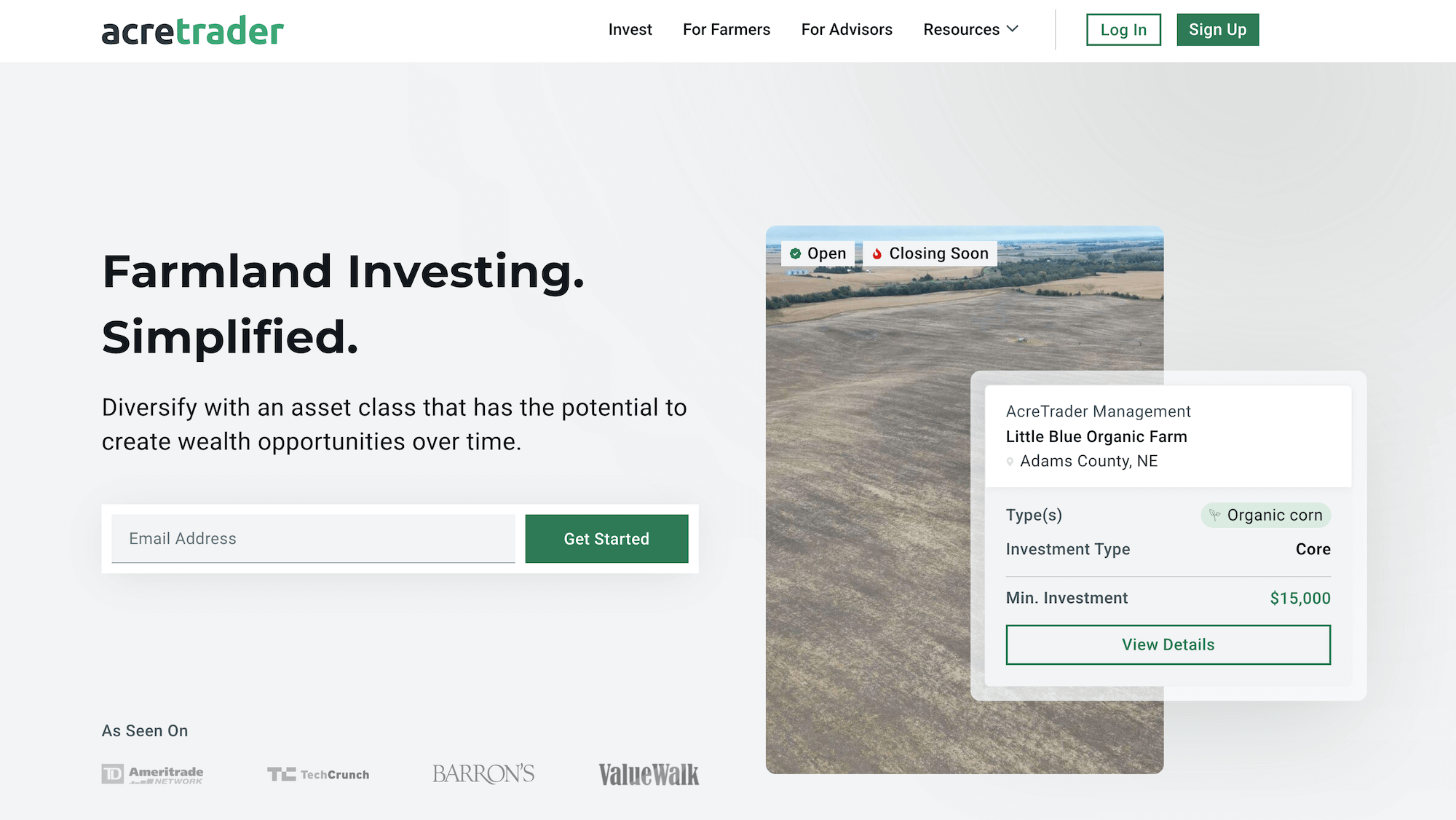
AcreTrader is a turnkey real estate platform that lets investors buy fractional ownership in U.S. farmland. Accredited investors can participate in farmland deals without purchasing an entire property, with minimum investments typically starting around $15,000.
Each farm is placed into its own LLC, giving investors equity in the underlying land. Returns generally come from monthly rent payments and potential appreciation over time. AcreTrader also manages all operational responsibilities, including relationships with farmers and day-to-day oversight, so the investment remains fully passive.
Although the platform makes farmland more accessible, these investments are long-term commitments. Holding periods of 5 to 10 years are common, and while AcreTrader has discussed creating a secondary real estate market for earlier exits, liquidity options remain limited.
It’s also worth noting that AcreTrader does not provide a payment guarantee like Constitution Lending. If farm tenants fail to pay rent, your expected cash flow may be disrupted.
5. Arrived Homes

Arrived Homes is a commercial real estate investment platform that identifies high-performing rental properties in attractive markets, including single-family homes, multifamily units, and vacation rentals, and uses investor capital to acquire them.
Accredited investors earn passive income through rental distributions and may receive additional returns when properties are sold. The minimum investment is low, starting at just $100. Arrived also manages the entire process, from tenant placement to maintenance and repairs, making it a fully hands-off investment option.
However, investors should understand that Arrived properties usually come with holding periods of five to seven years, though these timelines can shift depending on real estate market conditions and individual property performance. Throughout the hold period, investors receive quarterly dividends but generally cannot exit early without incurring fees.
It’s also important to note that Arrived does not provide protections if tenants fail to pay, which can affect cash flow.
6. Fidelity

Fidelity is a major financial services firm with more than $15 trillion in assets under management, offering access to REITs, stocks, ETFs, crypto, and a range of other investment opportunities.
One of its biggest advantages is accessibility. Investors can begin building a real estate portfolio with as little as $1 through publicly traded REITs, rather than needing the large minimums required by many alternative investment platforms.
Because Fidelity operates as a brokerage, it doesn’t guarantee returns. Instead, it provides the tools and investment choices needed to pursue long-term growth, including commission-free stocks and ETFs, actively managed mutual funds, high-yield money markets, and extensive research resources.
Fidelity’s own low-cost index funds are especially popular, offering broad market exposure at extremely competitive fees.
Liquidity is another key strength. Unlike private real estate or alternative investments, which often involve multi-year lockups, most assets in a Fidelity account can be bought or sold instantly during regular trading hours.
7. DiversyFund
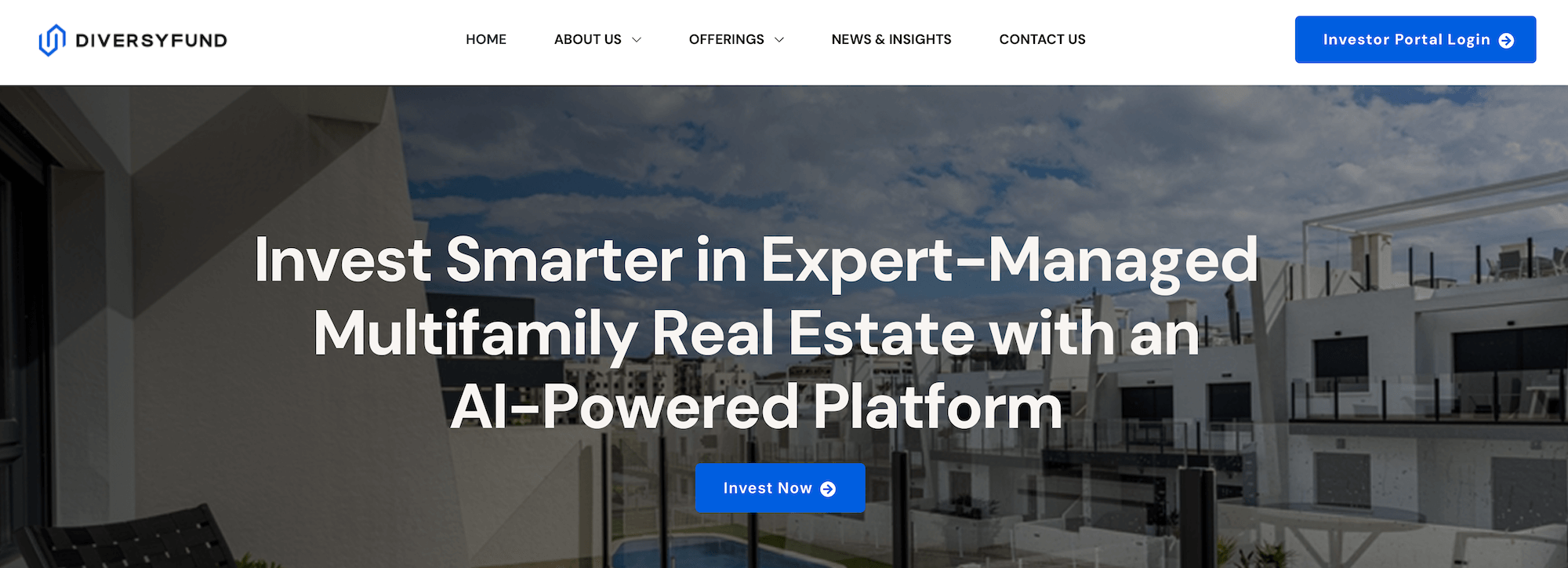
DiversyFund is built to help everyday investors enter real estate without needing the large amounts of capital required to buy properties outright. The company pools investor funds to acquire apartment complexes across the United States, and you can join its flagship Growth REIT with a minimum investment of just $500.
According to DiversyFund, its investment strategy is guided by four core principles: diversifying across markets and borrower types, focusing on long-term property appreciation, maintaining transparency, and leveraging an experienced team of real estate professionals.
In February 2023, the platform issued its first cash distributions for Growth REIT I, yielding an annualized return of roughly 6.1%. While past performance doesn’t guarantee future results, this does show that DiversyFund has delivered stronger returns than Fundrise to date.
Investors should be aware that capital is typically committed for around five years. Instead of issuing frequent dividends, DiversyFund reinvests rental profits into renovations and new property purchases. Most returns are realized when properties are eventually sold and gains are distributed.
Related reads